Terrace Steps on Platinum (111) Surface.
1. Introduction
This tutorial demonstrates two different approaches to creating terrace steps on platinum surfaces, based on the work presented in the following manuscript:
Manuscript
Šljivančanin, Ž., & Hammer, B., "Oxygen dissociation at close-packed Pt terraces, Pt steps, and Ag-covered Pt steps studied with density functional theory." Surface Science, 515(1), 235–244. DOI: 10.1016/s0039-6028(02)01908-8. 1
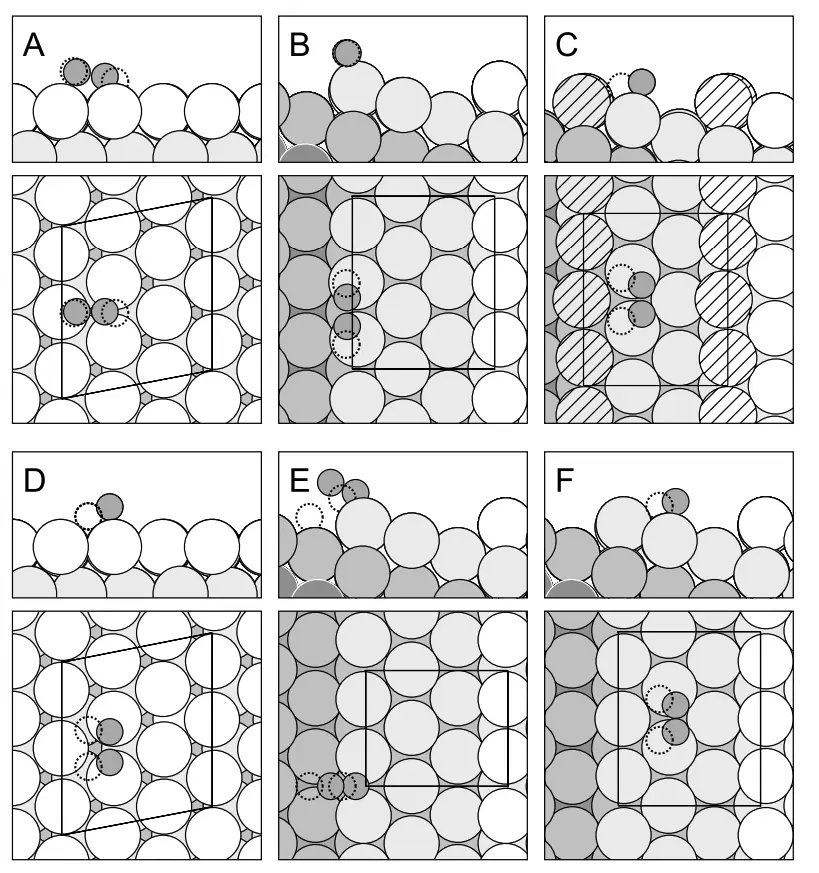
We will focus on creating platinum surface with terrace steps, as shown in FIG. 1. B:
We will demonstrate two methods:
- Creating a Pt(211) surface which inherently contains steps
- Creating a terrace step on a Pt(111) surface using the TerraceSlabDefectBuilder
2. Method I: Create Pt(211) Surface
- Creates a surface with inherent steps
- Smaller unit cell
- Fixed step geometry
- Good for studying specific crystal faces
2.1. Import Base Material
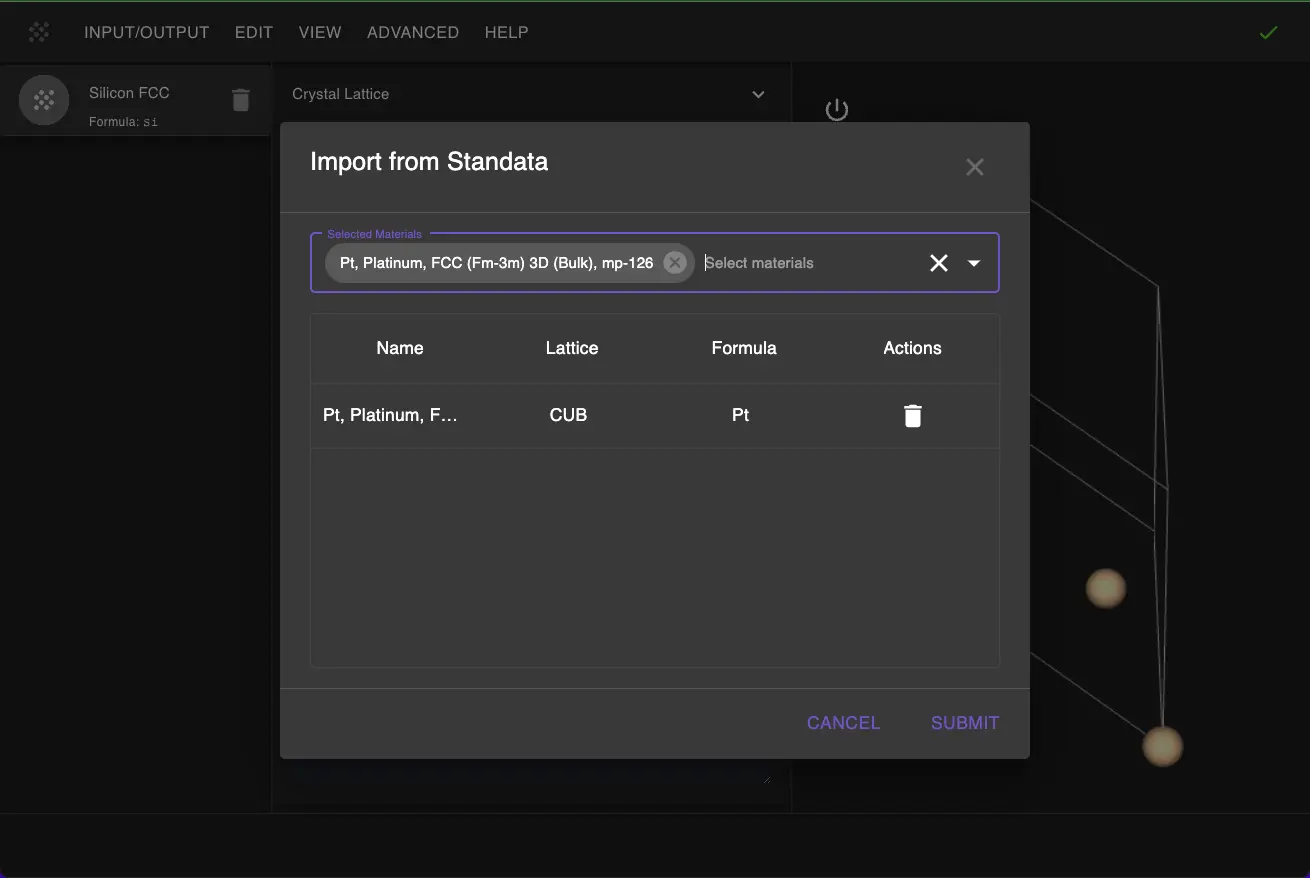
First, we need to import the platinum material from Standata:
- Navigate to Materials Designer
- Click on "Input/Output" menu
- Select "Import from Standata"
- Search for "Pt" and select the bulk platinum material
2.2. Launch JupyterLite Environment
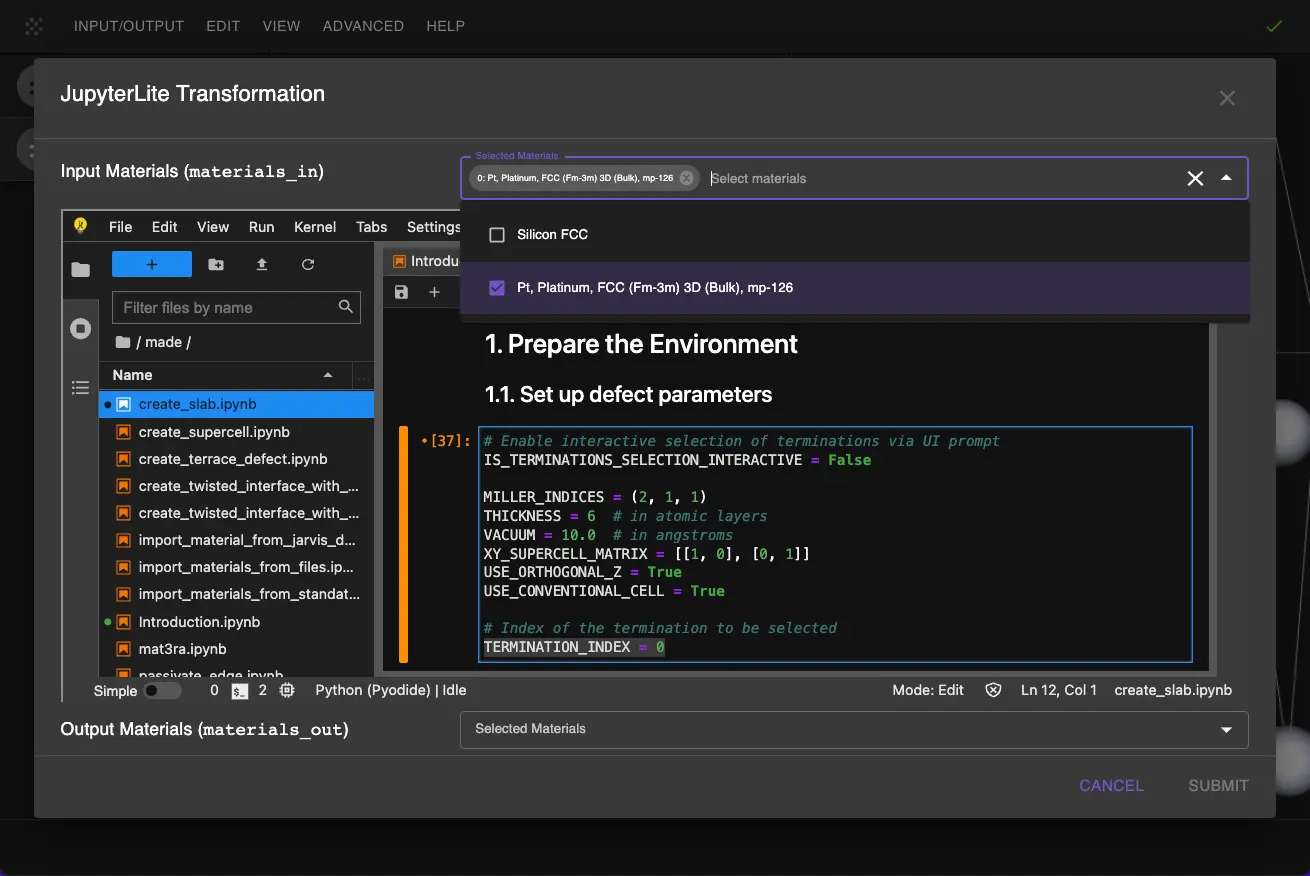
Select "Advanced > JupyterLite Transformation" to open JupyterLite.
2.3. Configure Slab Parameters
Open a create_slab.ipynb notebook and set up the slab parameters in the "1.1. Set up notebook" cell:
1 2 3 4 5 6 7 8 9 10 11 12 13 14 | |
These parameters will create a Pt(211) surface with:
- 2 (211) slab layers, eight atomic planes
- 10 Å vacuum region
- Orthogonal z-axis
- Using the conventional unit cell
2.4. Create the Slab
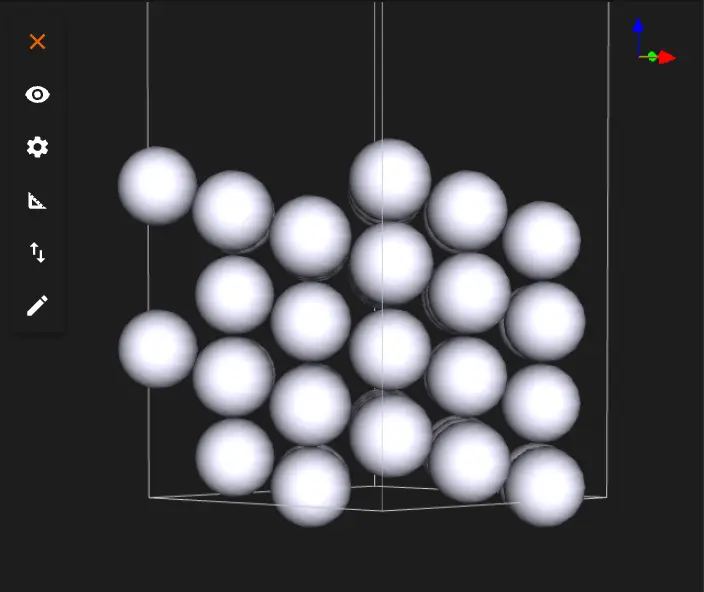
Run the notebook by clicking Run > Run All in the top menu. The notebook will generate the Pt(211) surface.
3. Method II: Create Terrace Step Defect on Pt(111)
- More flexible control over step placement
- Larger surface area available
- Customizable terrace height
- Better for complex step arrangements
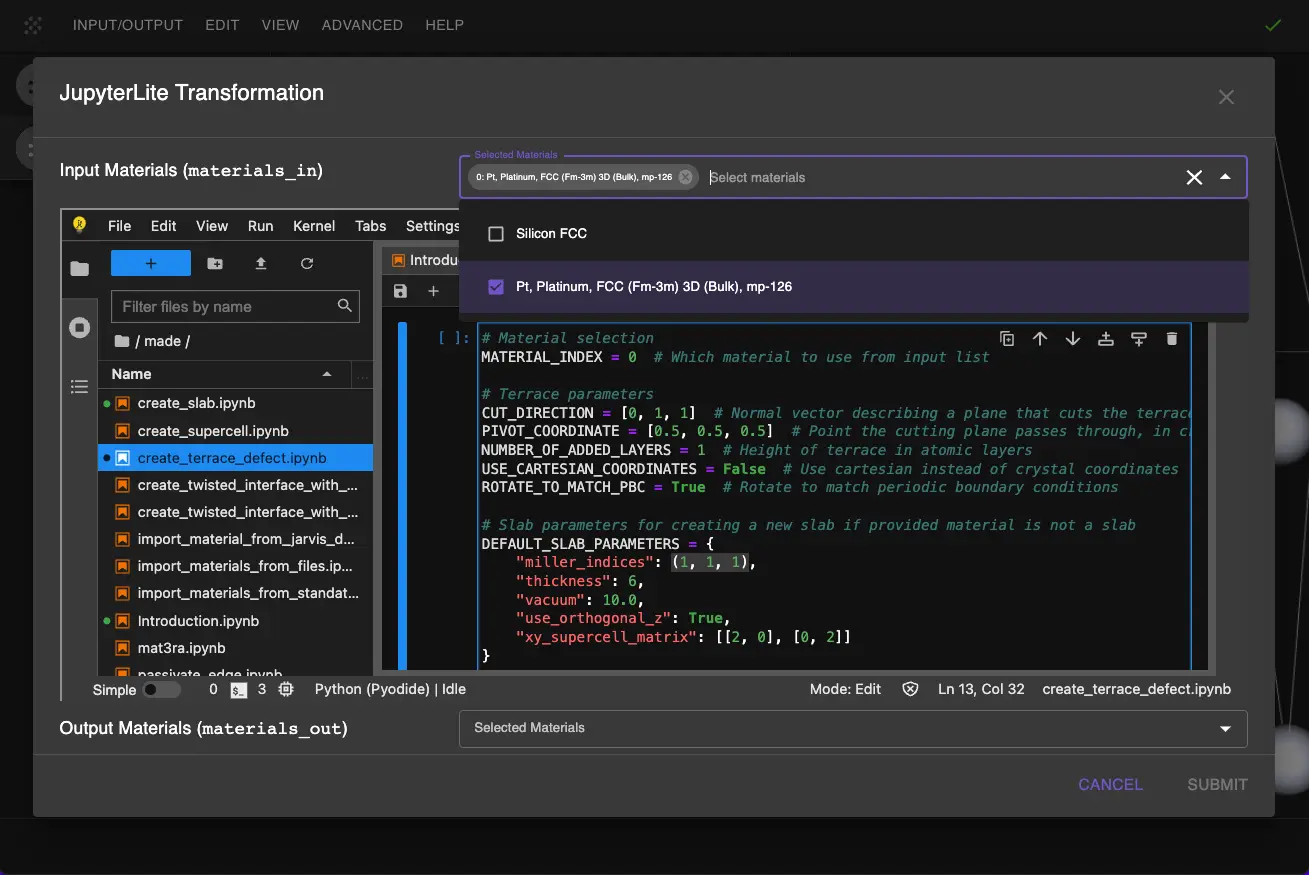
3.1. Open Terrace Defect Notebook
First, open create_terrace_defect.ipynband select Pt as the input material.
3.2. Configure Terrace Parameters
CUT_DIRECTION = [0, 1, 1] -- Normal vector for cutting plane, which will give a perfect periodic match along x and a match along y after rotation.
DEFAULT_SLAB_PARAMETERS["miller_indices"] = (1, 1, 1) -- Miller indices for Pt(111) surface
DEFAULT_SLAB_PARAMETERS["xy_supercell_matrix"] = [[2, 0], [0, 2]] -- Supercell matrix for final structure (which will effectively control the size of the terrace)
1 2 3 4 5 6 7 8 9 10 11 12 13 14 15 16 17 18 19 20 21 22 | |
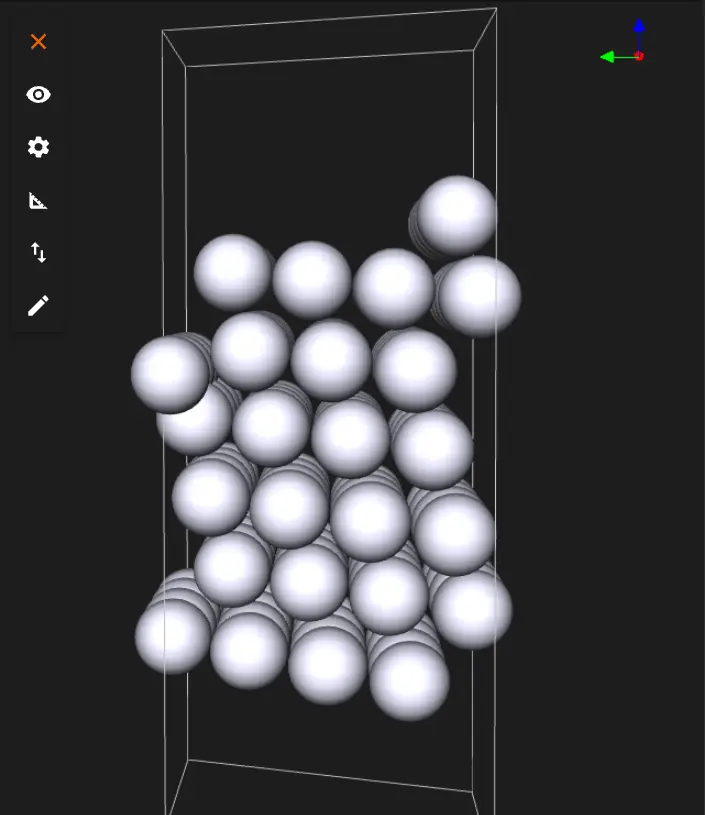
3.3. Create the Terrace
Run the notebook to create the Pt(111) surface with a terrace step.
The same material with repetitions:
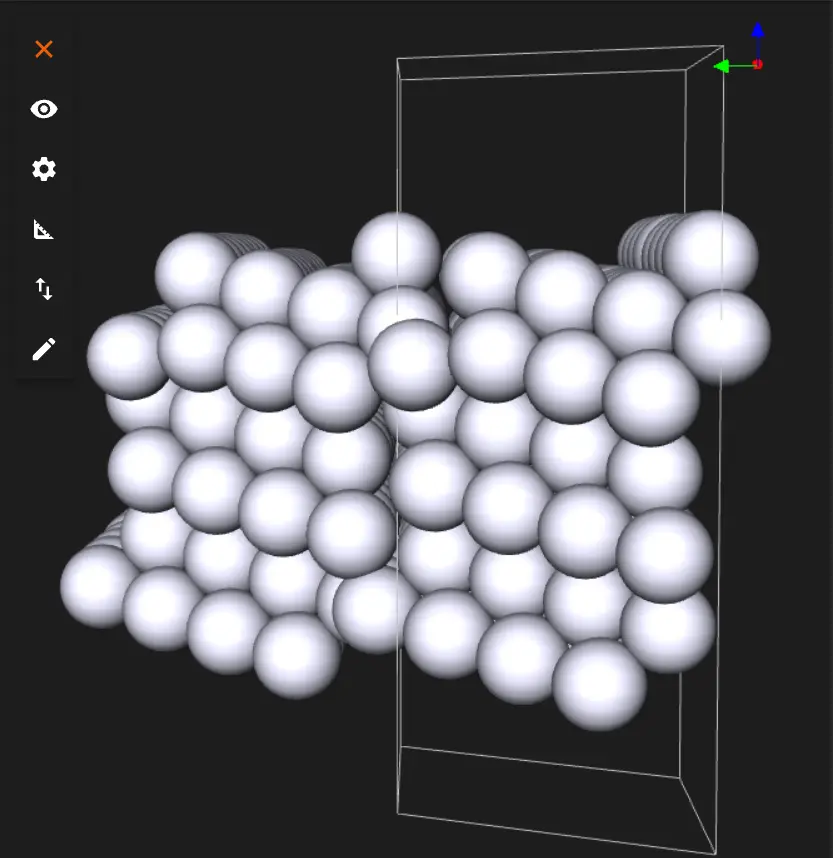
The user can save or download the material in Material JSON format or POSCAR format.
4. Add Oxygen
The O₂ precursor and the dissociated O pair are added to the Pt(211) slab and to the flat Pt(111) slab the terrace is built on, in section 4 of the defect_surface_step_platinum.ipynb notebook embedded in section 5 below, with these lines of its cell 1.1:
1 2 3 4 5 6 7 8 | |
On the 3-layer Pt(111) slab, one O placed at PRECURSOR_SITE_COORDINATE_111 snaps to the nearest fcc hollow (with 2 or 4 layers it lands in the hcp or atop site); the molecule axis points from that hollow to its nearest top-layer Pt, and the neighbouring fcc hollow is one Pt-Pt bond away on that side (top-fcc-bridge, FIG. 1. A). On Pt(211), the precursor lies along the step edge, the topmost Pt row, centred over the bridge between two neighbouring edge atoms (top-bridge-top, FIG. 1. B). Each precursor is O₂ centred on its site with the O-O distance of Table 1; each dissociated pair puts the two O atoms in two neighbouring fcc hollows (Pt(111)) or on the step-edge bridges one Pt spacing to either side (Pt(211)). All O atoms start ADSORBATE_HEIGHT above the topmost Pt. The notebook shows the four materials and saves them as Pt(111) O2 precursor, Pt(111) 2O dissociated, Pt(211) step O2 precursor and Pt(211) step 2O dissociated.
5. Interactive JupyterLite Notebook
The following JupyterLite notebook demonstrates both approaches. Select "Run" > "Run All Cells" to execute the notebook.
6. References
-
Ž. Šljivančanin and B. Hammer. Oxygen dissociation at close-packed Pt terraces, Pt steps, and Ag-covered Pt steps studied with density functional theory. Surface Science, 515(1):235–244, 2002. URL: https://doi.org/10.1016/s0039-6028(02)01908-8. ↩